
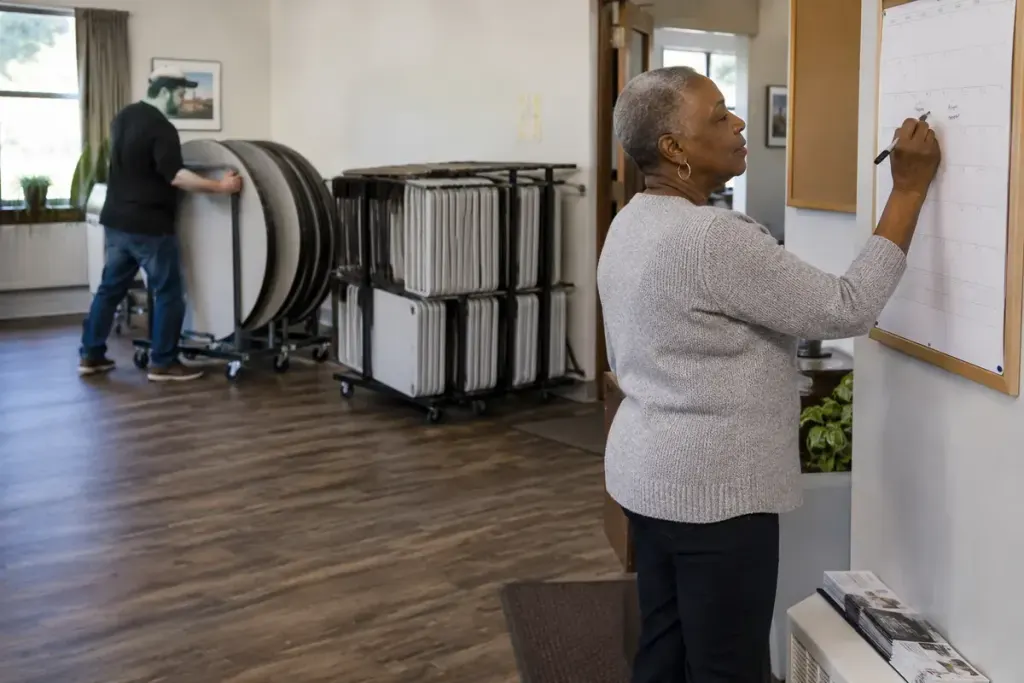
Two groups arrive expecting the same folding tables. Both believe they booked first, and the volunteer with the keys is left to settle the disagreement. A shared resource needs a booking rule that people can find before the conflict happens.
Define what a reservation includes
Identify the equipment clearly and state whether the booking includes collection, setup, use, cleaning and return time. If a group reserves a projector until six, another group cannot reasonably expect to collect it at six from a different building.
Use one authoritative booking record. Requests can arrive through different accessible routes, but someone must confirm them in the same system. A message asking about availability should not quietly become a reservation unless that is the stated process.
Agree how competing requests are decided
First confirmed request, limits on repeat bookings or priority for particular community activities can each be reasonable in context. The important step is to agree and publish the rule rather than inventing it when friends of the organiser want the same slot.
For an illustrative hall, a rule might limit advance reservations so one regular group cannot occupy every weekend. Test the rule against actual users’ needs before adopting it. Fairness includes whether people without constant internet access can make a request.
Explain cancellations, late returns and what happens if equipment becomes unavailable. Keep personal contact details out of a public calendar; publish availability, while protecting the information needed to administer the loan.
Give one person responsibility for confirming changes and identify a backup. A calendar that nobody maintains is only a record of what people hoped would happen.
After a month, review conflicts and unused reservations. Ask whether the rules made access easier or simply added paperwork. The aim is dependable sharing: a group can plan around the equipment because it understands when the reservation is real and what responsibilities come with it.