
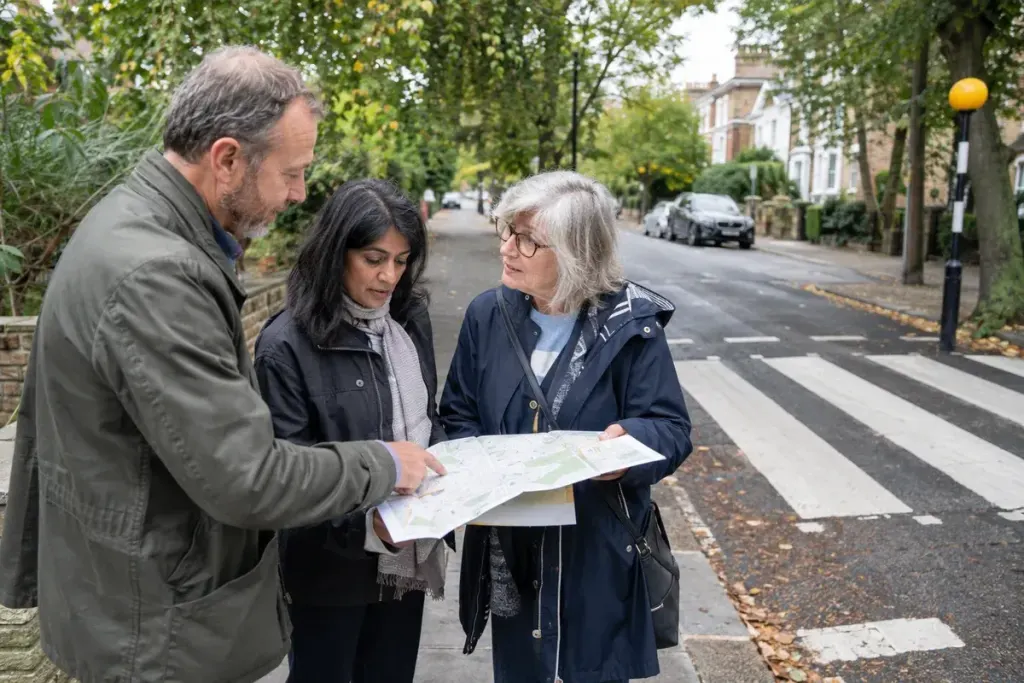
A familiar street looks different when someone else explains how they use it. The corner you cross without thinking might be difficult for a neighbour carrying shopping, pushing a buggy or using a mobility aid. A listening walk gives those experiences a place in a community discussion.
Begin with one question small enough to explore on foot: how do people reach the library, where do they wait for a bus, or what makes the route to the park awkward? “What should we improve in this neighbourhood?” is useful eventually, but too broad for a first walk.
Invite people who use the route differently
A group of friends taking the same journey at the same time can miss important details. Invite a mix of residents and offer another way to contribute for people who cannot join. A phone conversation, annotated map or short written account can add a perspective that the walk itself excludes.
Agree a manageable route, suitable meeting point and stopping places. Ask before taking photographs or recording voices. You are gathering experiences, not inspecting residents or collecting personal information about everyone on the street.
Keep observations separate from explanations
Use three columns on a page: what we noticed, what someone told us, and what needs checking. “A delivery vehicle blocked this crossing at 10:15” belongs in the first. “This happens every weekday” belongs in the second unless someone has actually checked the pattern. The distinction prevents a single visit from becoming a claim about the whole neighbourhood.
Here is an illustrative note: a bench was available near the bus stop, but one participant avoided it because the path to it felt uneven. The useful follow-up is to examine that short approach and hear from other users. Counting the bench alone would have missed the concern.
Bring back a question, not a finished solution
At the end, ask each participant which observation deserves further attention. Record disagreements as well as shared priorities. A brighter lamp might help one person while troubling a nearby resident; both experiences belong in the discussion.
The University of Kansas Community Tool Box assessment resources place community needs alongside existing resources. That is a useful reminder to notice what already works: an informal meeting place, a helpful shopkeeper or a route people trust.
Write a short account that participants can correct before sharing it. Name the route and visit time, describe who contributed without exposing personal details, and list what remains unknown. Finish with one achievable next step, such as asking the transport operator about the stop or inviting additional residents to compare experiences. A good listening walk opens a better conversation; it does not claim to speak for everyone.
Another practical question: Before Recruiting Volunteers, Write a Role Someone Can Understand.