
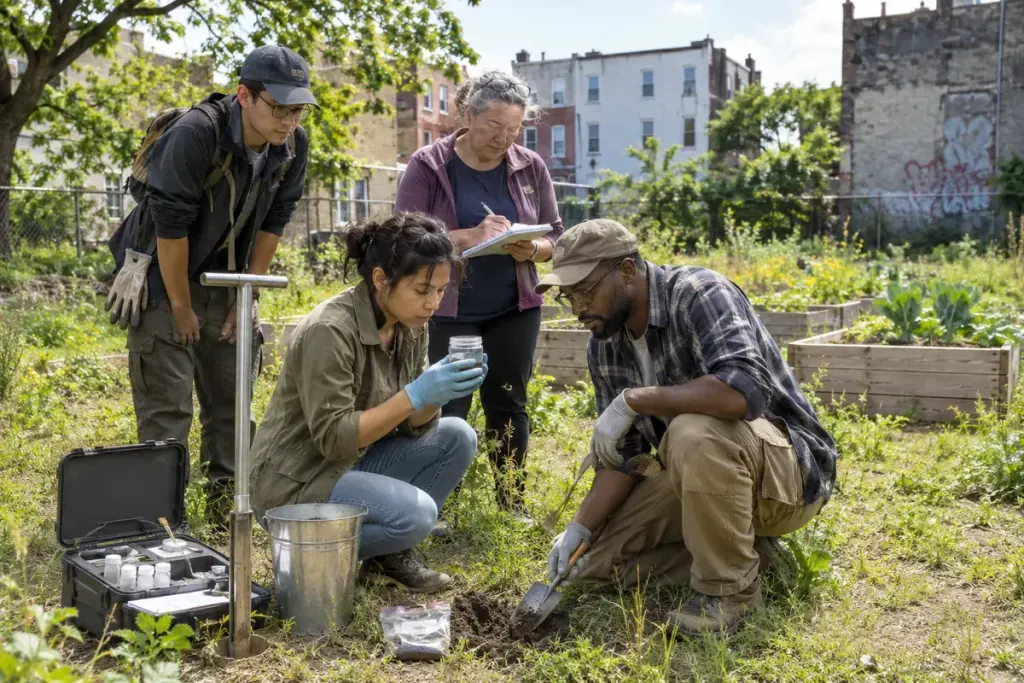
A vacant plot offers space for raised beds, a shared tool shed and a neighbourhood gathering place. If the land previously hosted industrial activity, the first project is understanding the site—not ordering seeds.
The US Environmental Protection Agency’s urban-agriculture guidance recommends assessing proposed garden sites for environmental contaminants, using property history to identify what may need testing. A soil fertility test and an environmental contamination assessment answer different questions.
Investigate before disturbing the ground
Establish ownership and permission to use the site, then collect available records of former uses, buildings, storage and fill. Ask the relevant local environmental authority or qualified specialist what investigation is appropriate. Do not assume a tidy surface or healthy weeds establish that the land is suitable for food growing.
Choose tests with professional guidance based on the site’s history. A generic test that omits the likely contaminants can provide reassurance without answering the important question.
Design around the findings
Raised beds with suitable imported soil may form part of a plan, but they do not automatically resolve exposure from paths, dust, water or contaminated areas elsewhere. The design needs to consider how people will use the whole space, including children and volunteers who dig or maintain it.
Document the agreed controls and who maintains them. If clean soil is brought in, retain its source information. If some areas must remain undisturbed, make that restriction visible in both the site plan and volunteer briefing.
A community update can separate three things: what is known, what is being investigated and which decisions depend on the results. This helps volunteers understand why planting may need to wait without filling the gap with rumours.
The aim is a garden the community can use confidently over time. A careful assessment is part of building that shared resource, not an administrative obstacle to the more photogenic work.