
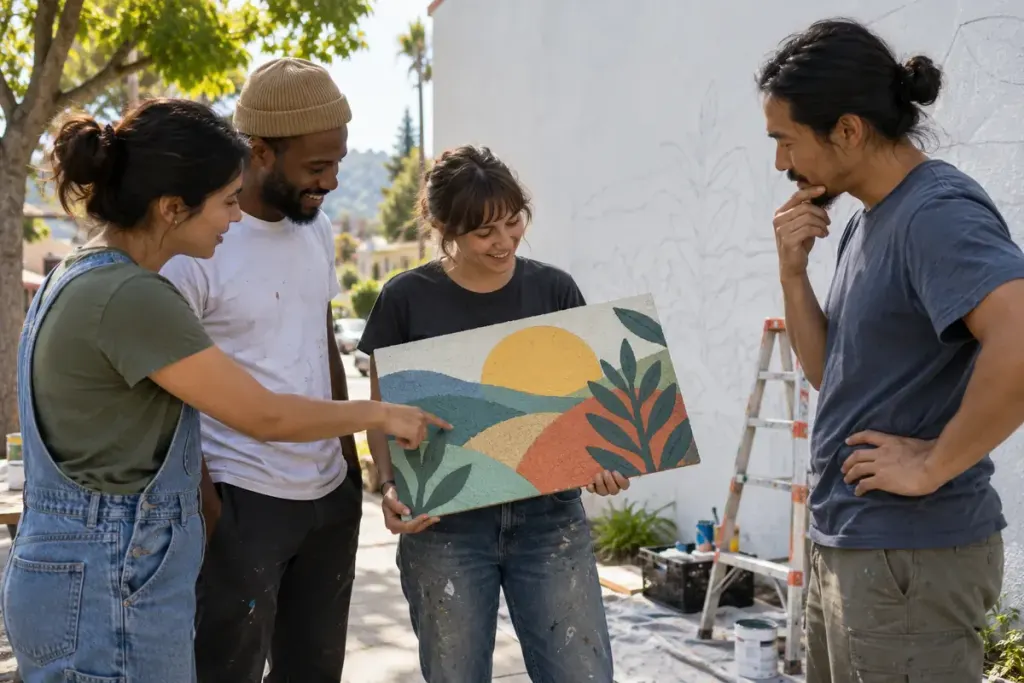
A community mural has an opening day, but it also has a life after the photographs are taken. Paint weathers, walls need repairs and buildings change hands. Discussing that future before painting can prevent a celebratory project from becoming an unclear responsibility.
Agree the lifespan with the people responsible
Confirm permission for the wall and any relevant local requirements. Include the property owner, project organiser and artist in a written discussion about intended duration, maintenance and possible removal. Artistic rights and contractual obligations vary, so obtain appropriate advice where needed.
Do not promise that an outdoor work will remain unchanged indefinitely unless the responsible parties can support that commitment. A temporary mural can be valuable when its temporary nature is clear from the start.
Name the maintenance decision-maker
Decide who receives reports of damage, who can approve repair and how costs will be considered. A well-meaning volunteer should not have to guess whether repainting a faded section is welcome or whether the artist should be consulted first.
Keep basic project information: approved design, materials, artist contact, permission record and dated photographs. Store it with the organisation rather than only on one volunteer’s phone.
- Agree how the artist will be credited.
- Record any inspection or maintenance expectations.
- Plan how building work will be communicated.
- Identify who can approve changes or removal.
For an invented example, a wall is scheduled for refurbishment in two years. The project might be planned as a two-year work with a final community photograph and documented closing event. That is more honest than discovering the deadline only when scaffolding arrives.
Review the agreement when organisers or property responsibilities change. A project can outlast the team that launched it. Giving its maintenance and ending the same attention as its beginning helps preserve relationships even when the physical artwork cannot remain forever.