
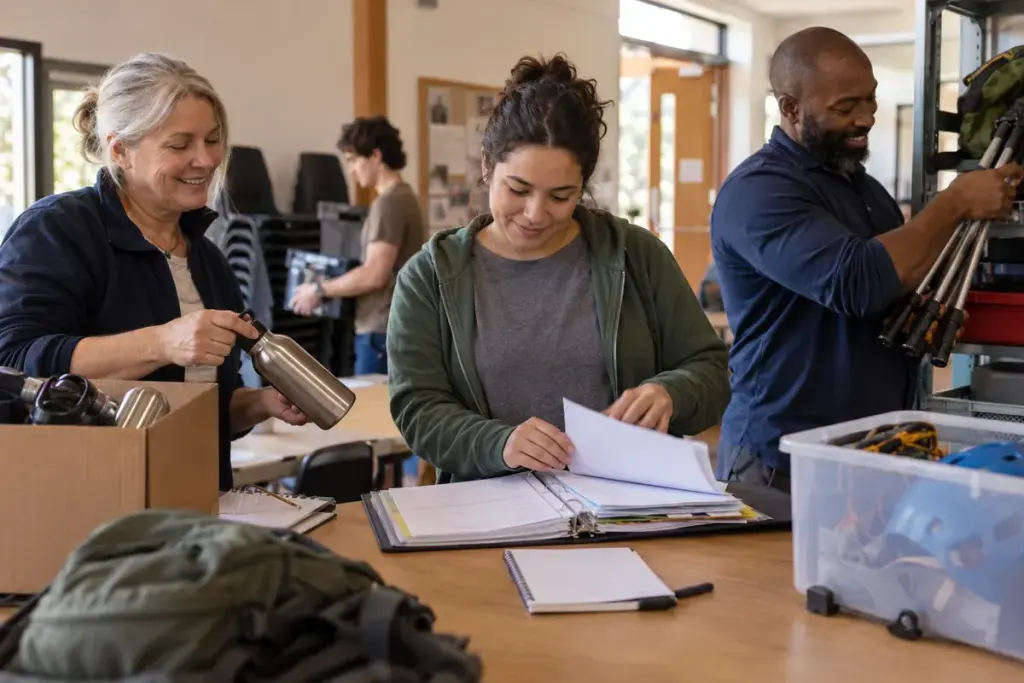
The final event has ended and the volunteer group chat has gone quiet. Three months later, somebody needs the supplier details, the final budget or the person responsible for a remaining repair. Without a closeout record, the project can disappear into individual inboxes just when its information becomes useful.
The Association for Project Management’s guidance on closure highlights handover, unresolved issues and a closure report. A small community project can apply that principle without copying the paperwork of a major construction programme.
Create a short record someone else can navigate
State what the project intended to do, what it actually delivered and what remains unfinished. Include the completion date, the owner of ongoing responsibilities and the location of essential records. Separate observed results from hoped-for longer-term benefits.
For an illustrative neighbourhood planting project, the event may be complete while watering and replacement planting continue. The closeout note should identify who accepted those tasks, rather than describing the whole project as finished and leaving care to chance.
Hand over access as well as information
Check that the receiving person can open the relevant files and understands which version is final. Keep personal details, financial records and consent documents within appropriate access controls. A public summary and an internal record can serve different needs.
- Resolve or assign each outstanding task.
- Record final spending and where supporting documents are held.
- Capture a few practical lessons while memories are fresh.
- Choose a later date to review benefits that cannot yet be measured.
Ask a volunteer who did not write the note to find one important item. If they cannot locate it, improve the organisation before archiving. A project closes well when its next custodian can continue the necessary work without reconstructing the entire history from conversation.