
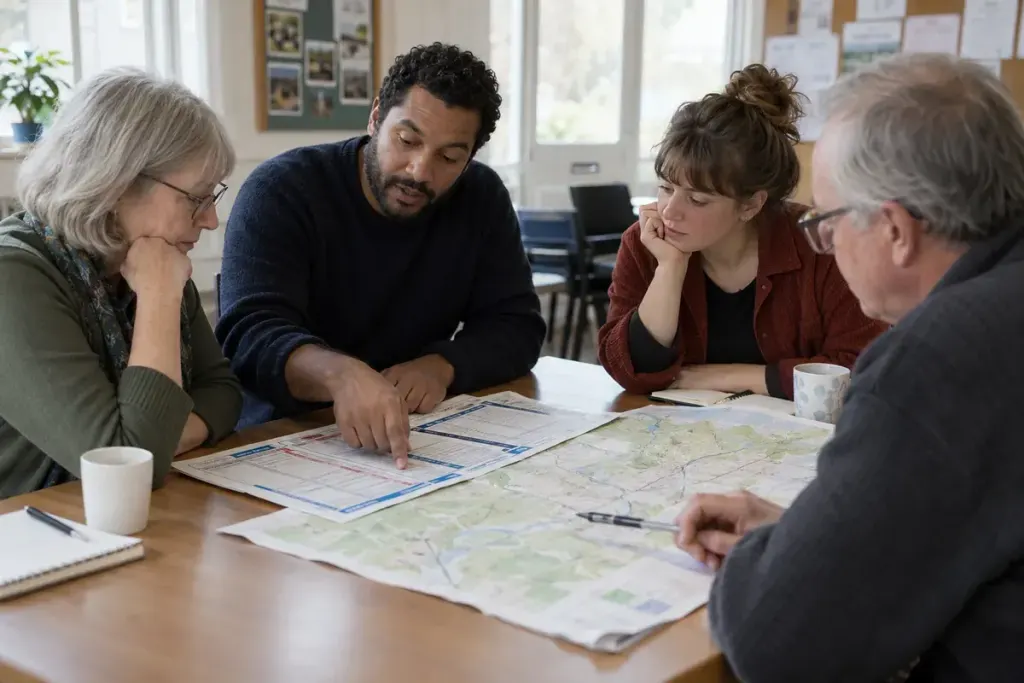
A venue can be close to a bus stop and still be difficult to leave after an evening meeting. The last service may depart before the discussion ends, or the useful connection may disappear earlier than the route’s final departure. Access includes the journey home.
Before fixing the time, check current transport information for the actual day. Weekday, weekend, holiday, and temporary timetables can differ. Record when the information was checked and link attendees to the operator’s current information rather than presenting an old screenshot as permanent guidance.
Work backwards from a usable journey
Allow time to leave the room, use facilities, reach the stop, and make any connection. Someone who uses a mobility aid or travels with a child may need more than the quickest walking estimate. Ask about access needs without requiring people to disclose personal circumstances publicly.
Set a meaningful finish time and keep decisions within it. If the advertised meeting ends at eight but the important vote routinely happens afterwards, people relying on transport are effectively excluded from that part of the event.
Give participants enough information to choose
Include the venue entrance, nearest relevant stops, known access arrangements, and a contact for questions. Explain any remote participation option accurately. Do not promise transport assistance unless it has been arranged, funded, and communicated clearly.
Where several venues are available, compare the whole journey rather than only room hire and parking. A slightly less central room with a reliable evening connection may be more usable for the intended group.
After the meeting, invite feedback about arrival and departure. People may have managed a difficult journey without mentioning it during the event. Use that information for the next date, while checking the timetable again. A practical transport plan is part of making participation possible, not an optional line at the bottom of the invitation.