
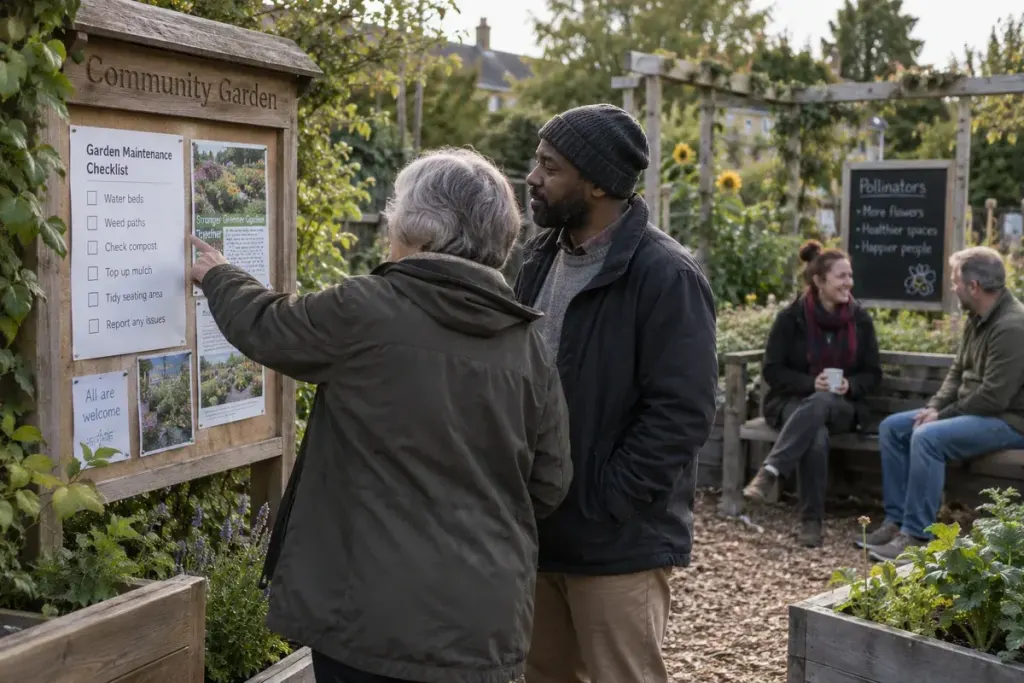
A community project is often easiest to organise on opening day. People arrive, photographs are taken and the new space looks cared for. The harder question is who checks the gate, replaces a broken fitting or answers a complaint six weeks later.
Maintenance should be part of the original plan, with an owner for each recurring task. “The community will look after it” expresses goodwill but does not tell anyone when to act or who can authorise a repair.
List the ordinary work
Walk through a normal week and identify cleaning, inspections, consumables, access arrangements and administrative tasks. Separate work volunteers can reasonably do from work requiring training, insurance or a qualified contractor. Do not assign a hazardous task merely because someone is willing.
Locality’s guide to managing a community building covers maintenance alongside governance and financial sustainability. Although a small garden or shared noticeboard differs from a building, the same planning question is useful: what will it take to keep this asset usable?
For each task, write a frequency, a responsible person or role, and a substitute. Include a simple reporting route for damage. The person who notices a problem should not have to identify a committee member from memory.
Budget for the unphotogenic parts
Initial funding may pay for installation while leaving no money for repairs or replacement. Estimate recurring costs and record how they will be met. Keep assumptions visible, especially when a donation or volunteer commitment is temporary.
A maintenance log need not be elaborate. A date, observation, action and follow-up owner can be enough for a modest project. Store it where authorised organisers can find it, while keeping private contact details appropriately protected.
- What must happen every week or month?
- Who can approve spending or close an unsafe area?
- What happens when the usual volunteer is unavailable?
- When will the plan be reviewed?
After the first month, ask whether the workload matches the estimate. Adjust the project if it relies on a few people doing more than they agreed. A smaller activity that can be maintained may serve the neighbourhood better than an ambitious one that quickly deteriorates.
Care after launch is part of the project’s value. Planning for it shows respect for the people who will use the space long after the opening-day enthusiasm has passed.