
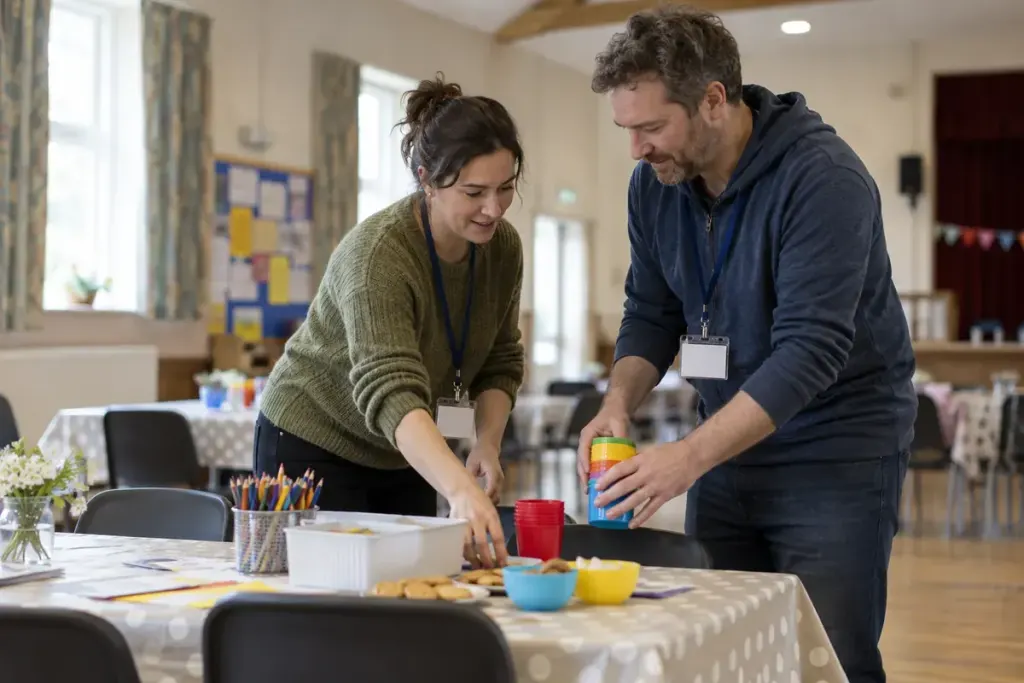
“Just follow someone around” sounds like an easy introduction, but it leaves a new volunteer guessing whom to approach, what they may do and when the session ends. A short shadow shift works better when its boundaries are explicit.
Choose a named guide and a small number of tasks to observe. Tell both people the start, finish and purpose before the shift begins.
Define observation and participation
Some tasks can be demonstrated and then practised under supervision. Others involve confidential information, equipment or safeguarding responsibilities that require training or authorisation. Explain the difference rather than expecting the newcomer to infer it.
For an illustrative community event, the volunteer might observe the welcome desk, practise directing a visitor and learn whom to contact for an unanswered question. They should not automatically gain access to the full attendee database.
Give the guide room to teach
A guide who is already covering three urgent jobs may have little capacity to explain decisions. Choose a manageable period and provide a backup contact if the guide is called away. The newcomer should not be left apparently in charge by accident.
Invite questions without making the person interrupt every interaction. A small notepad and a planned pause can help, provided no private visitor information is copied unnecessarily.
End with a brief debrief: what felt clear, what remains unfamiliar and what the next step will be. Confirm any further training and whether the volunteer wants to continue in that role. Participation should not turn into an open-ended commitment merely because the person attended once.
Record completion only at the level actually achieved. Observing a task is different from being assessed as ready to perform it independently. A good shadow shift leaves both the volunteer and coordinator with a shared understanding of the next safe, useful contribution.