
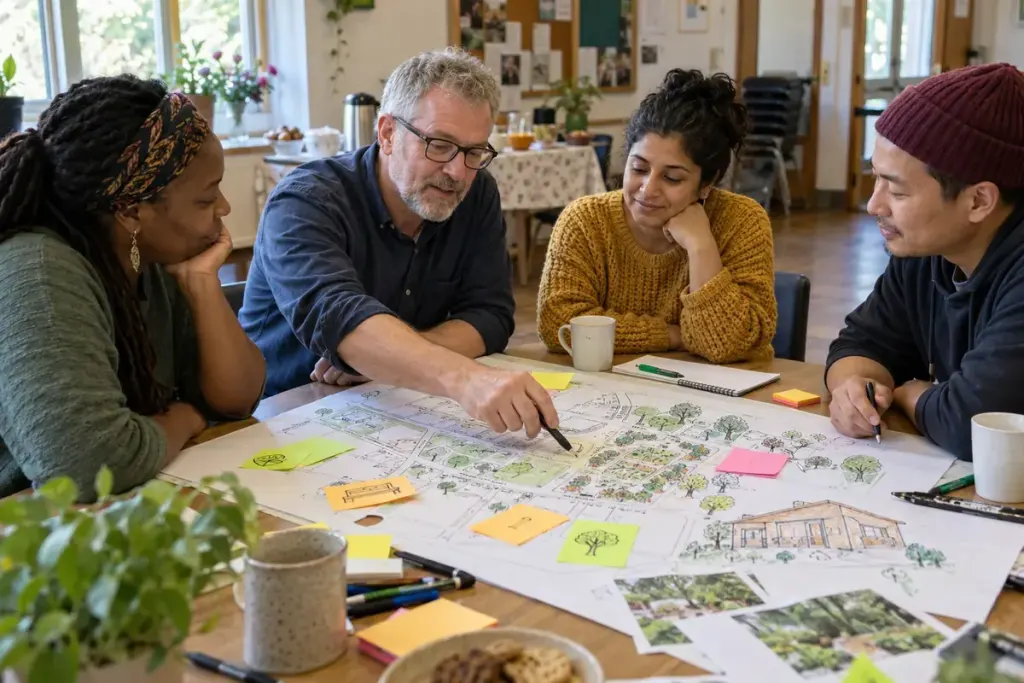
A neighbourhood planning meeting fills a page with problems. The list may be accurate, but it can still miss something important: the skills, relationships and places residents already use to help one another.
Asset mapping adds that perspective. The ABCD Institute’s approach to community development emphasises local gifts, skills, connections and leadership. Recognising those strengths does not require pretending that unmet needs or unequal resources have disappeared.
Build the map through conversations
For a small introductory activity, invite residents to describe something they know how to do, a group they are connected with, or a place that helps people meet. Contributions might include repairing bicycles, welcoming new neighbours, a gardening club or a room that can sometimes be booked.
Put these on a shared map or grouped cards, with permission. Include ways to contribute that do not require speaking in front of the whole room. A person who knows many neighbours may provide a useful connection even if they do not identify as a formal volunteer.
Do not publish personal contact details on an open map. Keep public information about places and organisations separate from private information shared during the discussion.
A skill is not an automatic offer of free work
Someone saying that they can repair a bicycle has not agreed to run a weekly workshop. Ask whether they want to contribute, what support they would need and what limits they want respected.
Likewise, a meeting room shown on a map may have booking conditions, costs or access limitations. Confirm those before building a plan around it. The map records possibilities to explore, not resources the organiser already controls.
Choose one modest connection to follow up. For example, residents interested in growing food might speak with an existing gardening group about a joint introductory session. Let the people involved shape the next step rather than assigning it from the front of the room.
Keep the map open to correction and new contributions. Its value lies in relationships and useful conversations, not in producing an impressive diagram once. Returning to it can help a community see both what it already has and where outside support is still needed.