
A donor offers a stack of tables, an old printer or a box of tools. The offer may be generous and still leave the community group with repair costs, unsafe equipment or items it has nowhere to store. Acceptance deserves a small process of its own.
Ask before arranging collection
Confirm what is being offered, who owns it and whether the gift has conditions. Ask for model details, dimensions, accessories, known faults and any available instructions. Photographs help with planning but do not replace inspection.
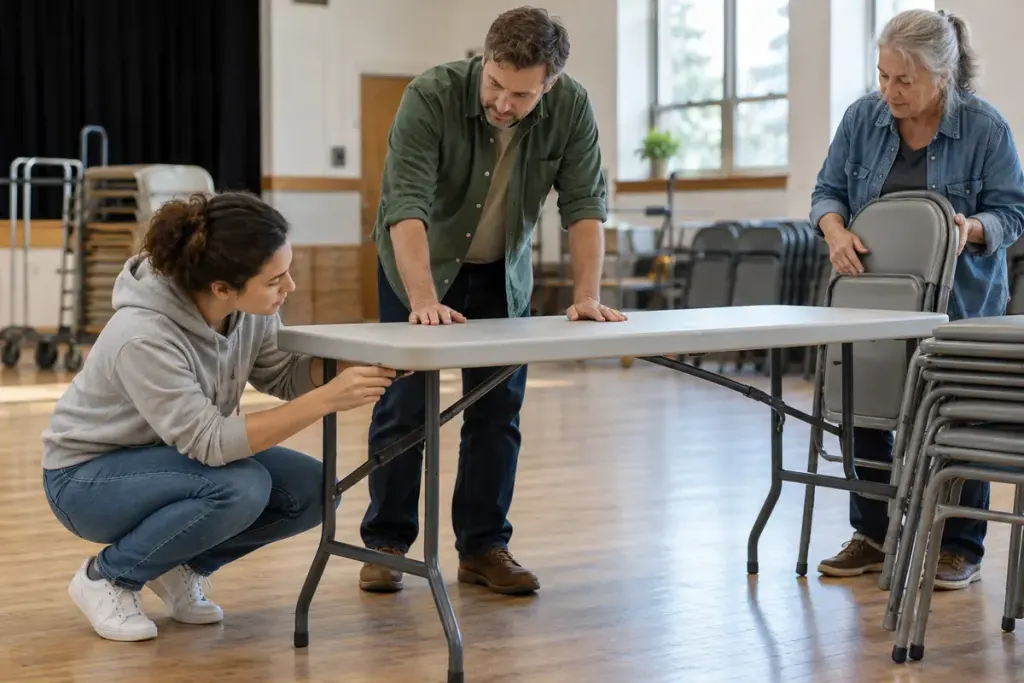
Compare the offer with an actual need. A large printer that requires expensive consumables may not solve the group’s printing problem. A folding table with a damaged locking mechanism should not enter service because the surface looks clean.
Separate acceptance from permission to use
Nominate someone to record incoming items and arrange checks appropriate to the equipment. Electrical, lifting or other specialist equipment may need a competent person and applicable safety procedures. Volunteers should not improvise repairs beyond their skills.
Keep unchecked items clearly apart from equipment ready for use. Record the condition, missing parts, decision and responsible person. If an item is unsuitable, follow an agreed return, disposal or recycling route rather than leaving it indefinitely in a corridor.
Consider information left on donated digital devices. Use an appropriate data-handling and reset process before reuse, without browsing the previous owner’s personal files. Clarify with the donor what should happen if the item cannot be used.
A polite acceptance message can say that the group will confirm suitability after inspection. That is more honest than promising immediate use to avoid an awkward conversation. The value of a donation is the useful service it enables after transport, checks and ongoing costs—not simply the number of objects received.