
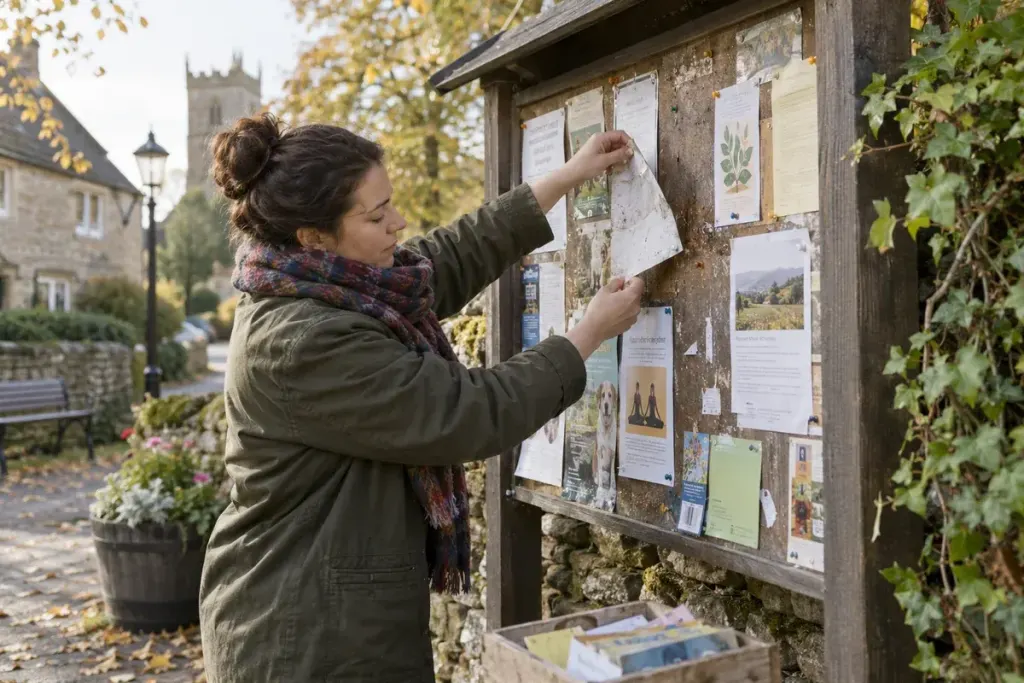
A resident stops to read a promising activity poster, then notices the event happened three months ago. Beside it, a service announcement has no date at all. The board is full, but the information is difficult to trust.
A noticeboard is a small public service. Its usefulness depends as much on maintenance as on the number of posters pinned to it.
Give every notice a useful lifespan
Ask for the event date or information-review date, a clear organiser and a suitable contact route. Ongoing services need a recheck point rather than indefinite display. An undated poster can outlive the person or organisation responsible for it.
Kesgrave Town Council’s noticeboard policy is one example of a public body defining how boards are managed and maintained. Local groups should set rules suited to their own space, responsibilities and community rather than assuming a council policy applies automatically.
Make the rules easy to understand
Explain who may submit notices, what information is required, how long material stays up and which content is outside scope. Apply the rules consistently. A process known only to one volunteer can look arbitrary when a poster disappears.
Keep a modest record of who supplied the notice and when it should be reviewed. Do not publish unnecessary personal details or collect more information than needed to administer the board.
Design for a quick, accessible stop
Leave enough space between notices and avoid layering current information over old sheets. Put essential details in readable type, with a straightforward description of the activity. A QR code can supplement a contact method but should not be the only route for someone without a smartphone.
Consider placement, lighting and whether a person using a wheelchair or with limited reach can read the main information. Ask residents what makes the board difficult to use instead of assuming the caretaker’s view is representative.
Assign a short maintenance round
Choose a regular review and a named backup. Remove expired items, check damaged covers and follow up on notices whose status is unclear. When a useful recurring service changes, replace the whole notice rather than adding an easily missed handwritten correction.
A well-kept board does not need to be crowded. A smaller set of current, readable notices can do more for community participation than a colourful archive of opportunities that have already passed.