
A projector, a room and a streaming subscription do not by themselves settle whether a community group can show a film to an audience. Before designing the poster, identify the permission required for the particular screening and the source you are allowed to use.
In the UK, Filmbankmedia’s Single Title Screening Licence is one example of a licence for an organisation’s public screening. Its licensing guidance explains that community or non-ticketed status does not automatically remove the rights question. Requirements and available licensing routes differ by territory and title; obtain confirmation for the actual event.
Describe the event accurately
When contacting the rights holder, distributor or authorised licensing service, provide the film, location, date, expected audience, admission arrangement and whether the screening will be advertised publicly. Ask which playback source is permitted. A licence to screen a title and permission to use a particular consumer streaming service are not necessarily the same thing.
Keep the written terms with the event record. Note any restrictions on publicity, copies, capacity or repeat showings. Do not assume that a licence for one event covers an ongoing club programme or another venue.
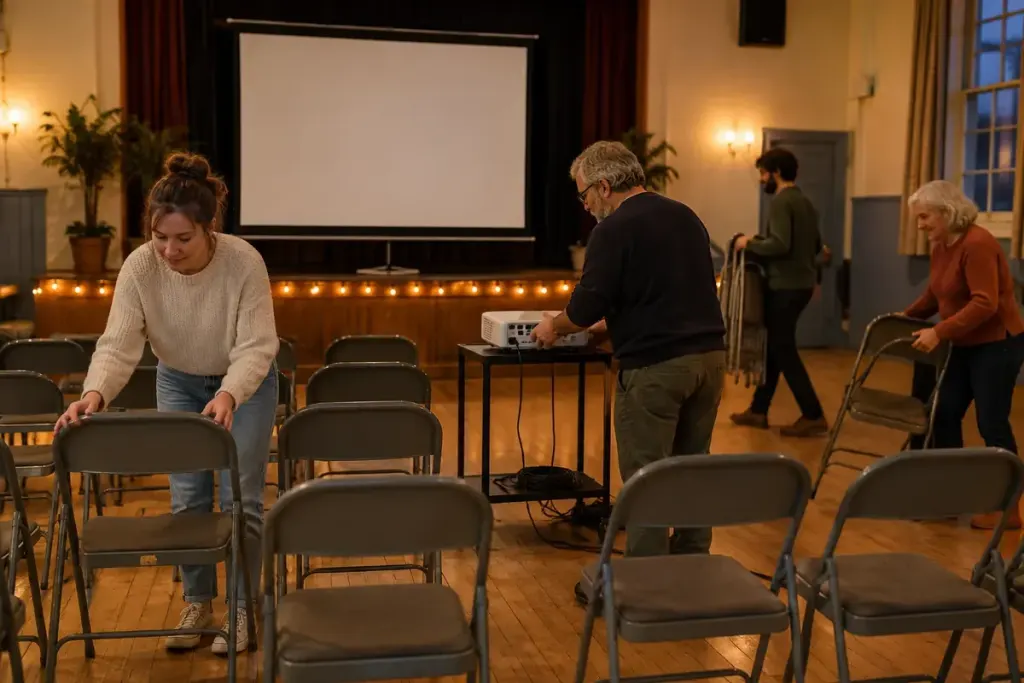
Once the rights are clear, check practical delivery: a suitable playback system, sound, captions or other access features available for the authorised version, seating and a person responsible on the day. Test the permitted source in advance without treating a successful technical playback as evidence of legal permission.
If the intended film is unavailable on suitable terms, choose another title before promoting the event. That is easier than cancelling after guests have made plans.
A community screening can be welcoming and informal while still having a clear permission record. The useful order is title and rights first, confirmed delivery second, public invitation third. That leaves volunteers free to focus on the shared experience rather than discovering an unresolved licence question at the door.