
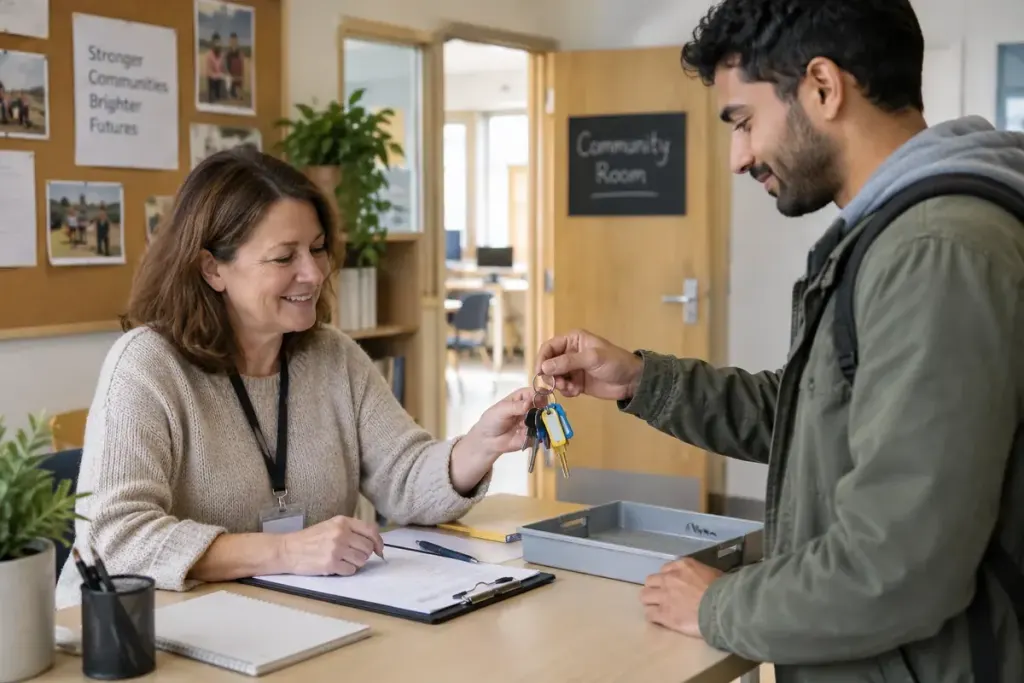
A volunteer finishes a shift, thanks the team and goes home with the storeroom key still in a pocket. Nobody has acted maliciously, but the next group cannot reach its supplies. A key-return step turns this predictable mistake into a manageable routine.
Start by identifying who is responsible for issuing and receiving keys or access cards. In a small community group, one named coordinator and a backup may be enough. The important part is that volunteers know whom to contact.
Record the item without advertising the lock
Use an internal identifier and keep the register in an access-controlled location. Avoid labels that publicly connect a lost key with a full address or sensitive room. Record who received it, when it was issued and the expected return point.
Explain the rules at issue: whether copying or lending is prohibited, what to do after a loss and how to return the item outside normal hours. Follow the venue’s security arrangements rather than inventing a hiding place under a planter.
Build the return into the final task
Place the check beside other closing duties, such as returning equipment and confirming the space is ready for the next user. The receiving person should acknowledge the return so both sides have the same record.
When a volunteer leaves the role, review any digital or building access associated with it through the appropriate administrator. Returning a physical key does not necessarily close a separate electronic account. Do not share passwords as a shortcut for handing over responsibility.
If an item is missing, report it promptly and let the venue decide the response. A lost key is easier to manage when the register identifies what it opens and who needs to act, without exposing those details publicly.
Keep the process proportionate and friendly. The purpose is continuity and accountability, not suspicion. A clear return routine protects volunteers from being blamed for an access problem that nobody had documented properly.