
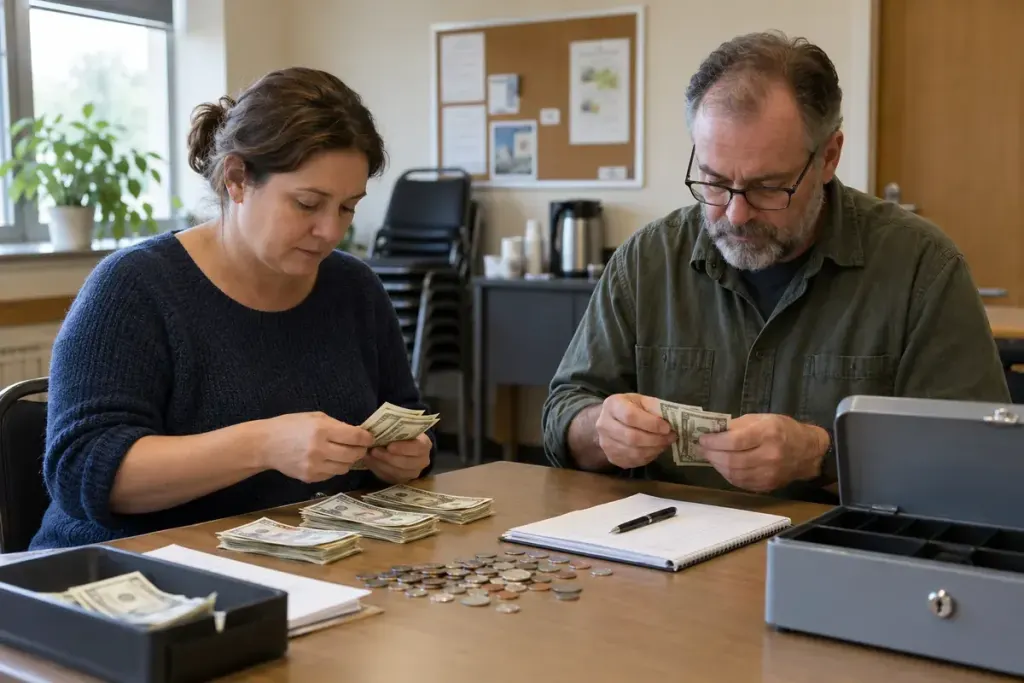
A donation tin reaches the end of an event, and everyone is tired. That is a poor moment to invent who will count it, where the money will stay and how the amount will be recorded. Agreeing the route beforehand protects the funds and the volunteers handling them.
For charities in England and Wales, the Charity Commission’s internal-financial-controls guidance recommends that at least two people handle and record cash, that collections have a receipt trail, and that cash is banked promptly without deducting expenses. Groups elsewhere should check their own legal and organisational requirements; the underlying control is a useful example, not a substitute for local rules.
Make one collection traceable from start to finish
Give the event or container a clear identifier. Record who received it, when it was returned and who counted the contents. Use a suitable private space, keep the cash secure and avoid announcing amounts where it could create a security risk.
The count sheet should show the total and the people who checked it. If the totals disagree, recount and record the resolution rather than quietly choosing one number. Keep a documented handover when the person counting is not the person taking the money for deposit.
Do not use the donation pile as an informal reimbursement fund. Record approved expenses through the group’s normal process so the collection amount and the spending remain visible as separate transactions.
Close the loop after the deposit
Compare the deposit evidence with the count record. If there is a difference, investigate it promptly and keep the explanation with the event records. The purpose is to make a question answerable, not to imply that volunteers are untrustworthy.
Where a donor specifies an intended use, pass that information to the person responsible for the accounts. Avoid collecting unnecessary personal details, and store any required records with appropriate access controls.
A simple process followed consistently is more useful than a detailed policy nobody can carry out at closing time. Before the next event, rehearse the handover with an empty container and the actual forms. That reveals missing steps while there is no money at risk.